Britain's coast asks a lot of a sketcher. The light moves, the tide moves, and the weather does whatever it likes. That is precisely why it suits quick studies: twenty minutes on a harbour wall, a headland or a row of beach huts will teach you more about shape, tone and editing than a whole afternoon at a desk. The ten places below were chosen for easy access, strong shapes and enough variety to keep a small sketchbook busy for a weekend. None of them demands a long walk or a permit, and all of them reward the kind of drawing you can finish before your fingers go numb. Take a small book, work fast, and let the conditions set the clock.
Why the Coast Suits a Short Study
Coastal subjects come pre-simplified. You get a horizon, a foreground plane and a handful of strong verticals — masts, groynes, cliffs, a lighthouse. Distance does the editing for you: a headland half a mile away is a flat shape with two or three tones, not a scramble of detail.
Before you start, decide what the sketch is about. Is it the meeting of sea and sky? The stack of roofs above a harbour? The way one rock breaks the line of the beach? Name it, then draw only what serves that idea. If everything is included, nothing is emphasised.
The coast is also unforgiving in a useful way. A tide that is turning, or a shower coming in over the headland, puts a hard limit on how long you have. That limit is a gift. It forces you to commit to a value early instead of hovering, and it trains you to build a drawing in the order that matters: shape first, tone second, detail only if there is time left. Printmakers and film set designers work this way for a living; landscape painters on location have always done it. Spend a week sketching nothing but harbours and you will notice your studio drawings getting bolder too.
Ten Coastal Locations for Quick Studies
South West England and Wales
St Ives, Cornwall. Sketch from the harbour beach at low tide, where boats sit at odd angles and granite cottages stack up behind. Block the boats in pencil, then lay one wash for the water and leave the paper bare for wet sand, which is always lighter than you think. Resist drawing every boat: three will suggest the harbour, seven will just look like clutter.
Durdle Door, Dorset. The arch is a lesson in negative space: draw the hole first, then build the rock around it. The clifftop path gives you the full profile without a steep descent. A fifteen-minute value study beats a careful outline here, because the real subject is the contrast between black limestone and pale chalk on the far side of the bay.
Tenby, Pembrokeshire. The harbour wall makes a good seat, and the painted houses rise in tiers opposite — ideal for overlapping shapes. Look for the inverted colours beneath moored boats; one wet wash pulled downwards is usually enough. A quick pencil note of the roofline before you add any colour will keep the whole town from sliding off the page.
Cemaes Bay, Anglesey. A small harbour, a rocky shore and the island's low, silvery light. Work in pen with no pencil underneath: boulders, breakwater and dinghies are simple enough shapes to commit to straight away. The reward is a drawing with real confidence, and the penalty for a wrong line is small.
The North East and Scotland
Robin Hood's Bay, Yorkshire. Rooftops tumble towards the sea, which makes the village a natural exercise in raking perspective. Sit on the sea wall and draw the whole cluster as one stepped mass, then cut the gaps between the buildings so the sky shows through. Squint and it becomes three tones: dark slate, pale render, grey sea.
Bamburgh, Northumberland. The castle on its dune ridge is a silhouette exercise. Sketch it from the beach at low tide, where a broad empty foreground means the keep becomes a single flat shape against the sky. Work smaller than you want to — the castle is far smaller on the page than it feels in the landscape.
Crail, Fife. One of the East Neuk harbours, a ring of stone with creels stacked against the wall and a stripe of red pantile behind. The proportions are tight and forgiving: draw one horizontal for the pier, another for the roofline, and the whole thing reads immediately.
St Abbs, Scottish Borders. A tight harbour squeezed between dark headlands, with a lighthouse above. The rock is nearly black in most lights, so block it in as one shape and save your hatching for the water, where the movement actually is. Reflections here are broken and horizontal — short strokes, not long ones.
Findhorn, Moray. Big skies, low dunes and a scatter of boats drawn up on the sand. This is a sky-to-land ratio exercise. Push the horizon high, give three-quarters of the page to cloud shapes, and try to get down the way the light falls out of the sky in bands rather than as one flat grey.
Elgol, Skye. The view across to the Cuillin is the reason to come, and the weather changing every few minutes is the reason to work fast. Make three thumbnails instead of one finished drawing, each with a different value structure — bright sea and dark mountain, then the reverse, then everything mid-tone and hazy.
A Twenty-Minute Structure That Works
- Minutes 1–3: block the big shapes. Horizon, foreground edge, two or three main masses. No detail, no outlines of individual objects.
- Minutes 4–12: commit to the middle tones. Wash or hatch the sea, the shadow side of the cliffs, the roofs. This is where the sketch is won or lost.
- Minutes 13–18: darks and one accent. The darkest note in the drawing should be small and specific — a mooring post, a figure, a gull, a doorway. It gives the eye somewhere to land.
- Minutes 19–20: stop. Close the book. If you keep going you will fill in and flatten everything you did well in the first ten minutes.
A sketch that stops early looks deliberate. A sketch that carries on looks tired.
What to Carry
- A6 to A5 sketchbook — portrait format suits vertical harbours; landscape suits horizons. Take one of each if you have room.
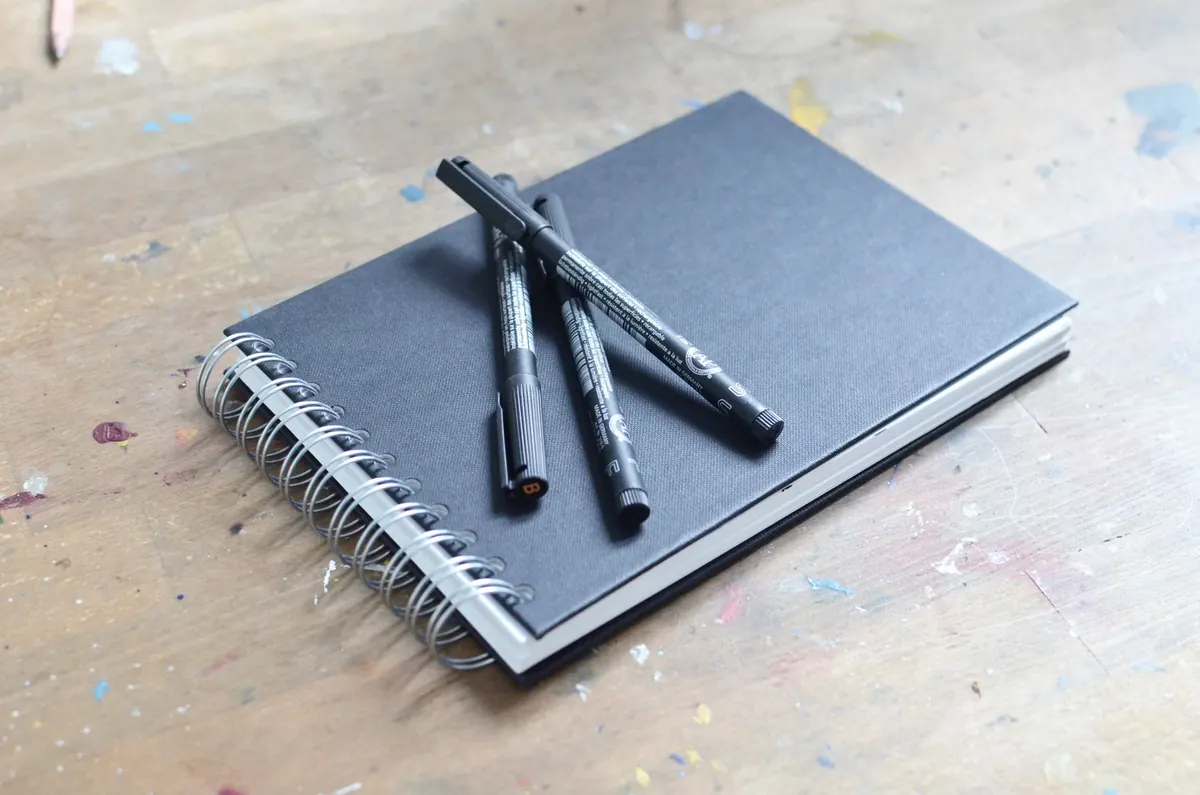
- Two pencils and a pen — a 2B for tone, an HB or 2H for structure, and a fine liner you cannot erase.
- A tiny paint tin — three colours are enough at the coast: an earth, a blue, and a warm red-brown. Mix all your greys from the first two.
- A water brush — no jar to spill, no water to carry.
- Bulldog clips or an elastic band — coastal wind turns a loose page into a sail.
- A sit mat and a hat — the two items most often left behind and most often regretted.
Pick one location, give it two visits in different weather, and you will learn more than by ticking off all ten. The coast is generous that way: it will never look the same twice, so the study can always be a little better than the last one.
Photo: Skylar Kang / Pexels