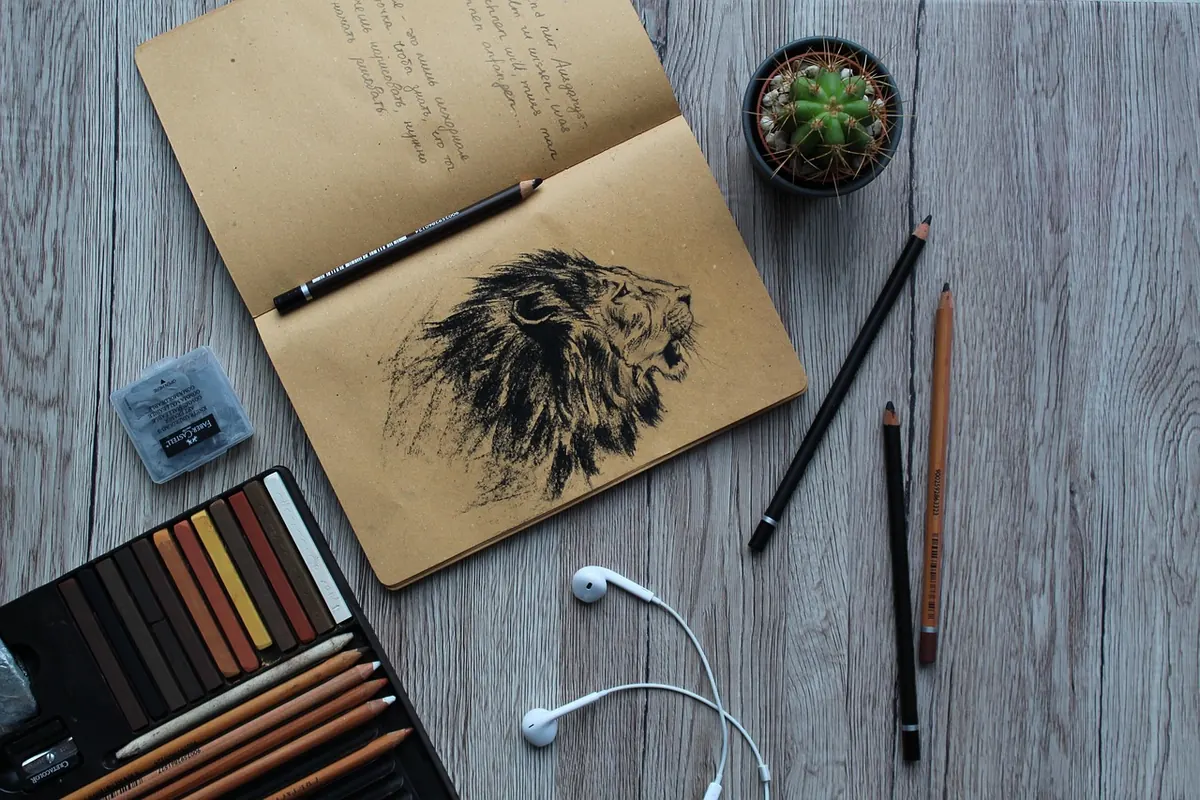
Give a graphite pencil to ten sketchers and you will get ten different drawings. Swap half of those pencils for charcoal and the drawings change again — not just in darkness, but in attitude. Graphite rewards patience. Charcoal rewards nerve.
Both are carbon. Both fit in a pocket and cost very little. So the question is not which is better, but which one suits the way you like to work — and when.
What you are actually holding
Graphite pencils are a blend of graphite powder and clay, fired and encased in wood. More clay means a harder, lighter, longer-lasting point; more graphite means a softer, darker, faster-wearing one. The letter on the barrel tells you where your pencil sits on that scale.
Charcoal is different in kind. Willow and vine charcoal are sticks of wood burned until only carbon remains. Compressed charcoal is charcoal powder bound with a little gum and pressed into dense sticks or pencils. Neither contains clay, so neither leaves the faint metallic sheen graphite can leave behind. Charcoal marks are matt, dusty, and blacker than any pencil you own will manage.
Graphite: control, detail and a clean page
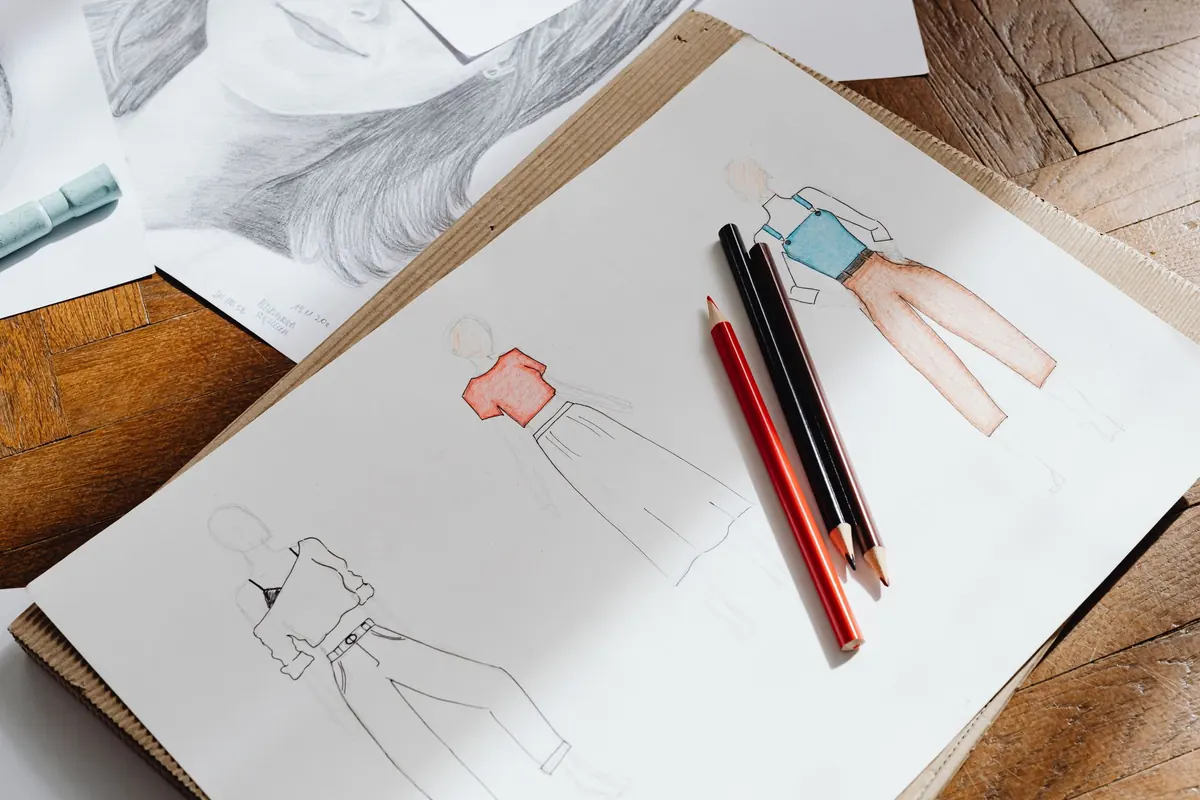
If your sketchbook is full of faces, hands, buildings or mechanical studies, graphite is probably already your default. It holds a point well enough for eyelashes and brick courses, and it layers gently: press lightly for a pale grey, build three or four passes and the same pencil delivers a deep tone.
The grades matter more than beginners expect:
- 9H to 4H — very hard, very light. Useful for fine construction lines and underdrawing, but they can score the paper if you press.
- 3H to H — light and tidy. Good for delicate hatching and for outlines you intend to erase.
- HB and F — the middle ground, handy for general sketching and for jotting notes on the page.
- B to 3B — soft, dark, comfortable. The workhorse range for most tonal drawing.
- 4B to 9B — very soft and rich. They blunt quickly, smudge easily and give the darkest marks graphite can offer.
Keep a 2B, a 4B and an HB within reach and you can handle most sketches without thinking about it. Graphite is also forgiving. A putty rubber lifts tone without wrecking the paper, and you can pull highlights out of a dark passage long after you thought the drawing was finished.
Charcoal: tone, speed and atmosphere
Charcoal comes into its own when you care about mood more than edges. The stick is thick, so your arm moves more than your fingers, and the marks arrive fast: broad sweeps for shadow, the side of the stick for a wash of grey, a thumb for soft transitions, a corner for a decisive line.
Its softness cuts both ways. Charcoal will not hold a crisp point for long, and a resting hand will smear work you were pleased with. That same smudgeability is what makes it so good. Tone blends without tools, dark passages have a depth graphite never quite reaches, and a pose can be blocked in during a ten-minute life drawing.
Most people work with three things: hard or medium compressed charcoal for structure, soft charcoal for the deepest darks, and a white chalk or pastel pencil for highlights. Charcoal's matt surface takes white beautifully, which is why so much charcoal drawing happens on mid-toned paper.
Side by side
- Darkest value: charcoal wins comfortably. Even a 9B pencil looks grey beside a soft charcoal stick.
- Finest detail: graphite wins. Sharpened charcoal pencils get close, but crumble and blunt sooner.
- Erasability: graphite lifts cleanly; charcoal leaves a grey ghost that is hard to remove entirely.
- Smudging: a hazard with charcoal, occasionally a gift with graphite — smear a soft pencil deliberately and you get a smooth blend.
- Finish: graphite can look slightly shiny at its darkest; charcoal stays flat and matte.
- Paper: graphite is happy on smooth cartridge paper. Charcoal needs tooth — a rougher surface such as Ingres or pastel paper holds the dust and gives the mark grip.
- Portability: graphite pencils travel cleanly. Charcoal sticks snap, dust everything and want a tin or a roll.
One practical point: charcoal drawings should be fixed. A spray fixative, used outdoors or by an open window, stops the dust migrating into the rest of your sketchbook. Graphite rarely needs it, though a light coat will stop soft pencil smearing on facing pages. Treat charcoal dust and fixative spray with respect, and speak to a health professional if you have any respiratory concerns.
Which should you pick?
Try this on your next sketch:
- Planning a detailed study, portrait or architectural drawing — use graphite. Start with an HB for construction, then move to 2B and 4B for tone.
- Drawing a ten-minute life pose, a moody landscape or anything large — use charcoal. Block the big shapes with the side of the stick, then find the edges.
- Working slowly and precisely, correcting as you go — use graphite. It gives you a second chance.
- Working quickly and expressively, building atmosphere — use charcoal. It commits, and that commitment often looks better than hesitation.
- Still unsure — layer them. Charcoal for shadow masses, graphite pencil on top for the sharpest details.
Keep both in the same tin
The most useful step is to stop treating this as a choice. Take one sheet of mid-toned paper, block in a simple object in charcoal, then draw over the top with a 2B pencil. The pencil gives you window frames, wire, the rim of a cup; the charcoal keeps the shadow underneath alive.
Charcoal builds confidence because it is difficult to be fussy with. Graphite builds accuracy because it lets you look twice. Learn each on its own terms, then let them share a page — the drawings will be better for it.
Photo: nejcelu / Pixabay